Camels as Dowry: Were They Really Used in History?

- Published on
- Last updated
- Reading time
- 6 min read
You've seen the joke online. Someone gets a camel score and tags their partner under it. But somewhere between laughing at your number and scrolling to the next post, you might've wondered: was this ever a real thing? Did people actually hand over camels to get married?
Short answer: yes, in a way. Long answer: It's a little more layered than the meme makes it sound, and the real story is worth knowing.
Dowry or Bride Price? The Words Get Mixed Up Online
Before anything else, let's clear up a mix-up. Most camel jokes use the word “dowry,” but that's not quite the right term for what actually happened in most of these cultures.
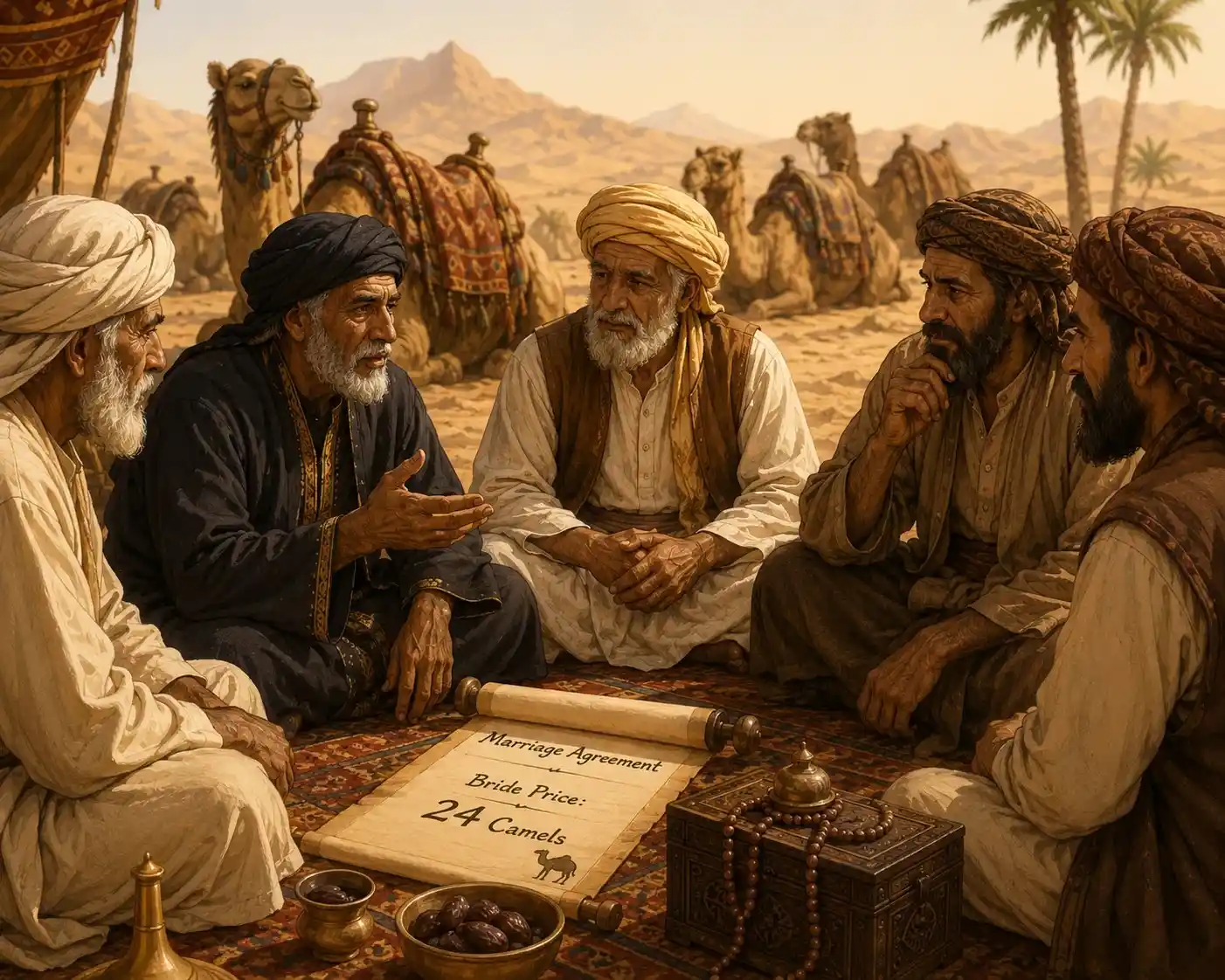
A dowry is the wealth the bride's family gives to the groom. A bride price (sometimes called “mahr” in Islamic tradition) works the other way: the groom or his family hands over wealth, animals included, to the bride's family. When people talk about “camels for a bride,” they're almost always talking about bride price, not dowry.
Online, the word “dowry” just stuck as the catch-all term, the same way people say “literally” when they mean “figuratively.” It's not technically right, but everyone knows what you mean.
Where the Camel-for-a-Bride Custom Actually Comes From
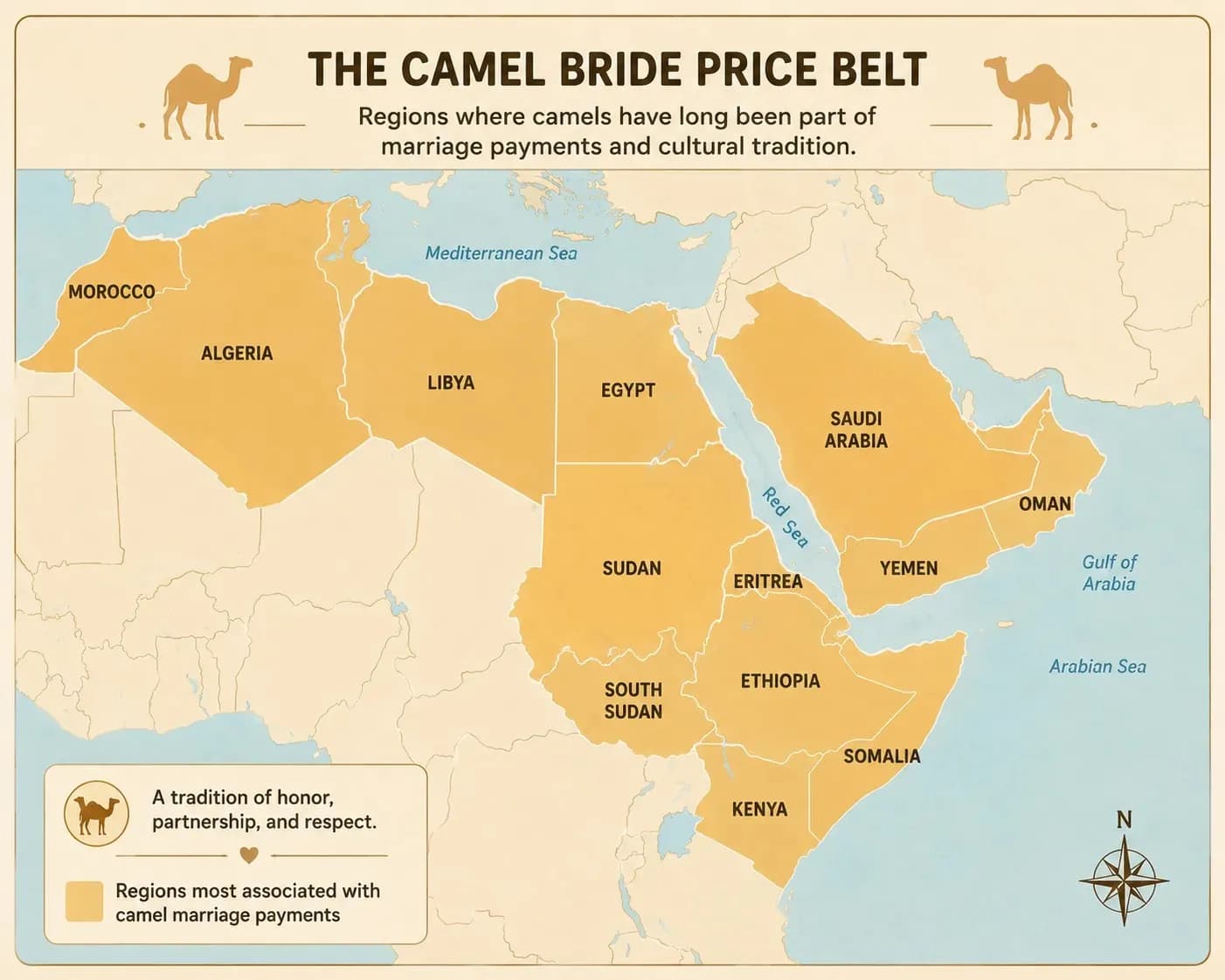
Bedouin Tribes of the Arabian Peninsula
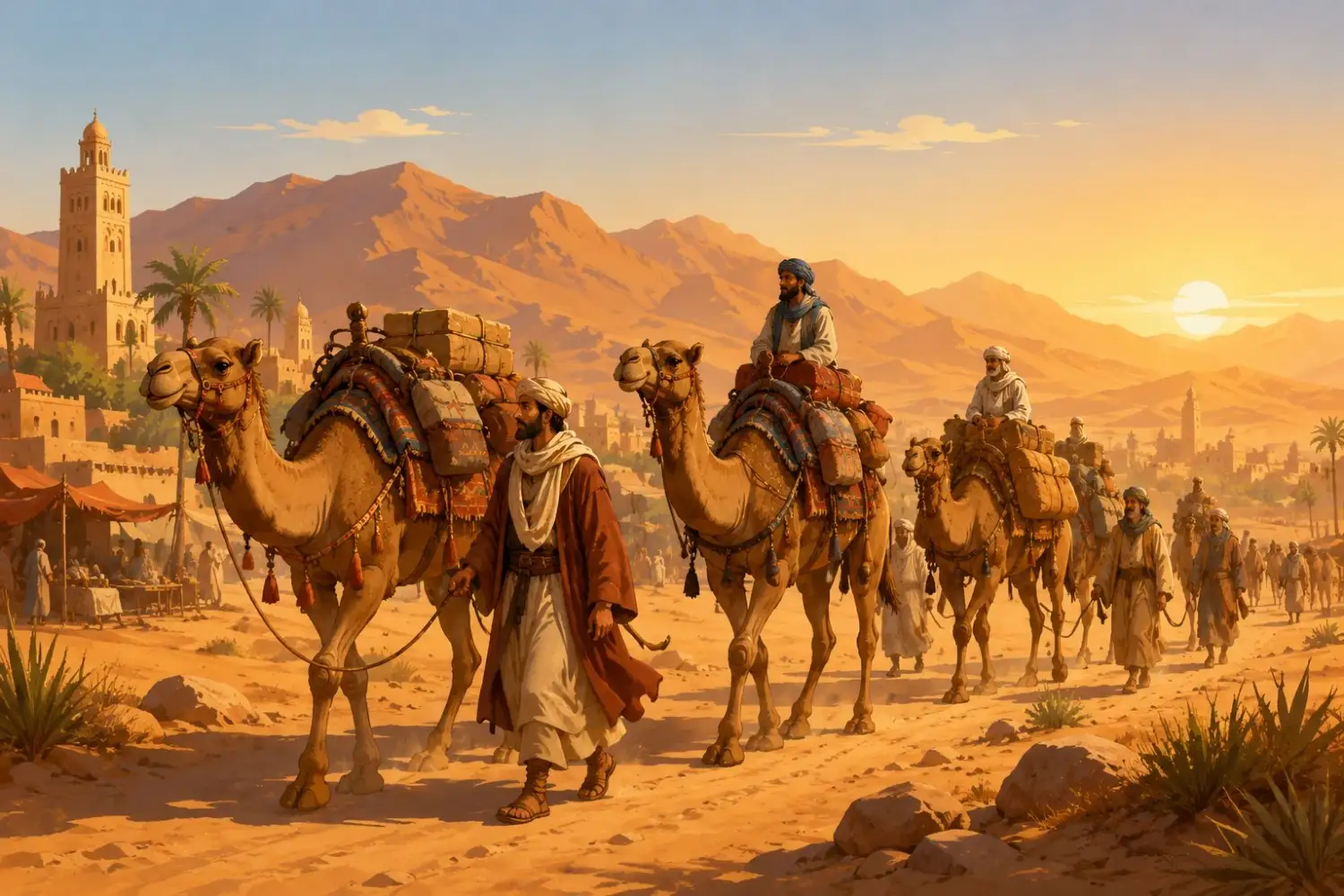
For Bedouin communities across the Arabian Peninsula, the camel wasn't just an animal. It was transport, food, status, and currency rolled into one. Marriage payments followed that same logic. A groom's family would offer a set number of camels to the bride's family, and that number shifted depending on the standing of both households. A bride from a respected family could mean a heavier payment. It wasn't random. It was a system tied closely to how wealth worked in desert life.
Pastoral Herding Communities in East Africa
The same basic idea shows up far from the Arabian desert, too. Among pastoralist groups like the Gabbra people, who herd livestock across parts of Kenya and Ethiopia, camels have long played a role in marriage payments. Researchers who've studied these communities have noted that a typical brideprice has sat around a small, fixed number of camels per marriage, a detail that comes up in a study on Gabbra pastoralists and how brideprice connects to herd size and household wealth. It's one more sign that this wasn't a one-off Arabian custom. It showed up anywhere camels were the backbone of daily survival.
Why Camels Specifically, and Not Cattle or Goats?
In a desert economy, camels did more work than almost anything else around. They carried goods across long distances, gave milk, survived where other livestock couldn't, and signaled real wealth just by existing in their herd. A family with camels wasn't just rich. They were equipped to survive harsh stretches that would wipe out herders who only had goats or cattle.
That's why camels made sense as a marriage payment. You weren't handing over a pet or a farm animal. You were handing over mobility, food security, and status, all wrapped into one creature. Cattle worked the same way in other cultures, just suited to a different climate.
Did the Number of Camels Actually Mean Something?
It did, and it wasn't pulled out of thin air. The number of camels that made up a marriage payment was usually a sign of the social standing of the family of the bride, the ability of the groom to pay, and sometimes the customs peculiar to a tribe. A higher number could signal a respected family line or a particularly sought-after match. It worked a bit like a dowry negotiation anywhere else in the world, just measured in a different unit.
This is also part of why two people from different tribes or regions might've paid wildly different amounts. There was no single fixed “camel price for a bride.” A match involving a bride from a particularly prominent family could reportedly climb into the dozens of camels, while a more modest household might settle for a handful. It depended entirely on where you were and who you were marrying into.
Is This Custom Still Around Today?
In most places, no, not in the way it used to work. In large parts of the Middle East and North Africa, payments in kind are replaced by modern currency, legal reforms, and changing economies. Cash, gold, or a mix of both has largely taken over where camels used to do the job.
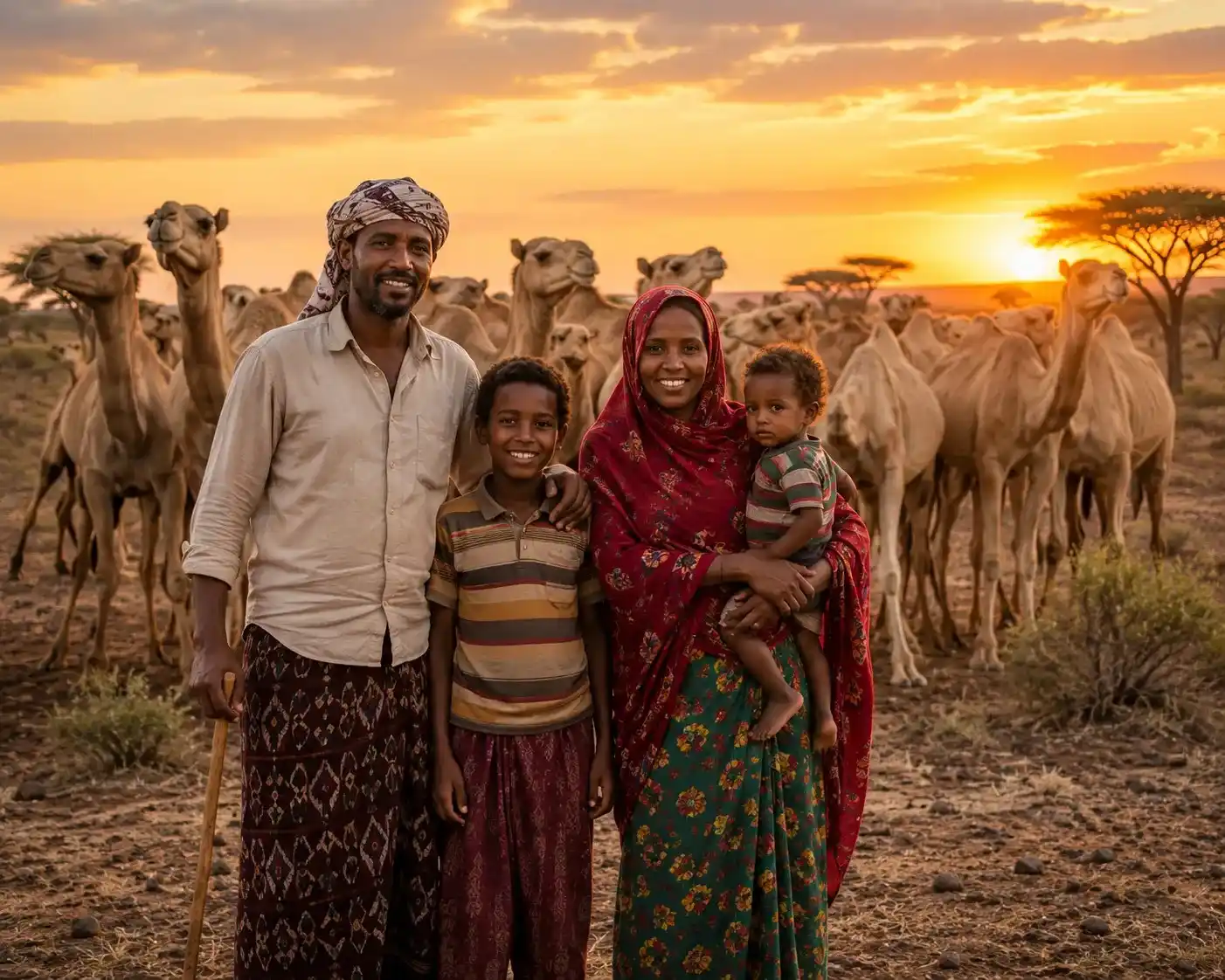
That said, the custom hasn't completely disappeared. In some remote pastoral communities, particularly herding groups in parts of East Africa and the Horn of Africa, livestock, including camels, still plays a role in marriage negotiations. It's less common than it once was, and it usually exists alongside money rather than instead of it, but the thread hasn't fully broken.
How a Real Custom Turned Into an Internet Joke
Somewhere along the way, this genuine cultural history got flattened into a punchline. People stopped thinking about marriage negotiations and started thinking about a funny number to send a friend. That's the same cultural memory behind the camel calculator meme, and it's also why people keep coming back to the camel worth quiz just to see what number they land on. Neither one is trying to recreate the real custom. They're just borrowing the shape of an old joke and turning it into something quick and shareable.
A Final Word
Camels weren't a punchline to start with. They were currency, survival, and status, all tied up in one animal, and marriage payments were just one piece of how that worked. The version you see online today, a silly number under a goofy caption, is a long way from where this started, but it didn't come from nowhere. It's a real custom, stretched, simplified, and turned into something you laugh at on your phone instead of negotiating over coffee in a desert tent.
Frequently Asked Questions
Were camels actually used as a dowry, or was it bride price?
Technically, bride price. A dowry moves from the bride's family to the groom, while what happened with camels usually moved the other way, from the groom's side to the bride's family. The word “dowry” just became the popular shorthand people use, even though “bride price” is the more accurate term.
Why camels instead of other animals?
In many desert economies, the camel was the most valuable of possessions. They were better than cattle or goats at handling transport, food, and survival in harsh, dry conditions, making them a natural choice for signifying serious wealth in a marriage contract.
Was the number of camels given importance?
Yes. The number often reflected the bride's family status, the region, or the groom's ability to pay. It wasn't a set, global price. It varied according to the tribe, the region, and the particular match.
Does the custom of camel marriage still exist somewhere today?
In most places, it's faded out in favor of cash or gold. A few remote pastoral and herding communities, mostly in parts of East Africa, still incorporate livestock like camels into marriage negotiations, though usually alongside money rather than in place of it.
Where was this tradition most often performed?
Most famous examples are Bedouin tribes across the Arabian Peninsula and pastoral herding communities across parts of North and East Africa, wherever camels were central to daily survival and wealth.